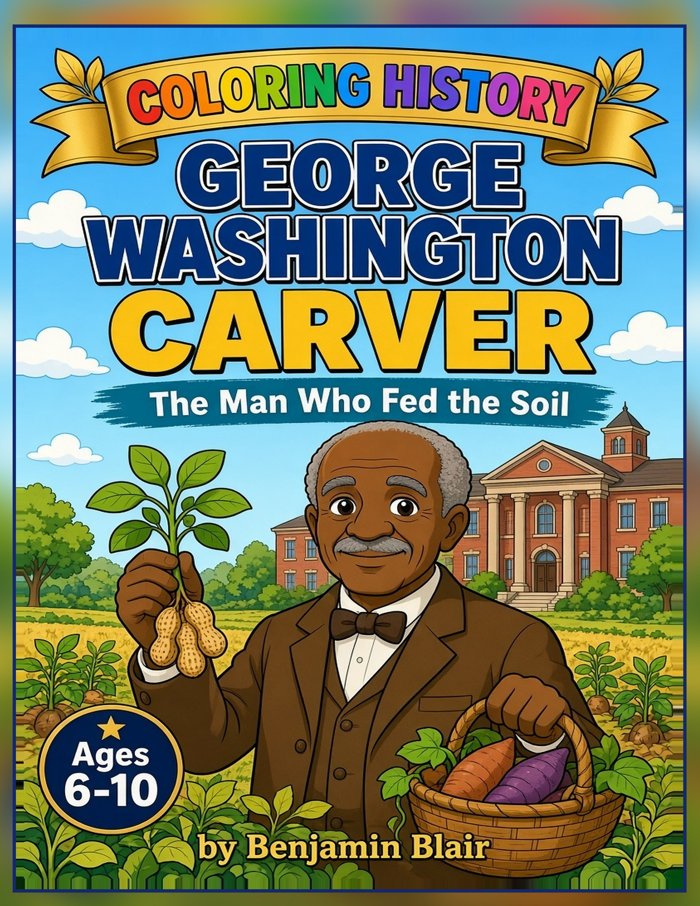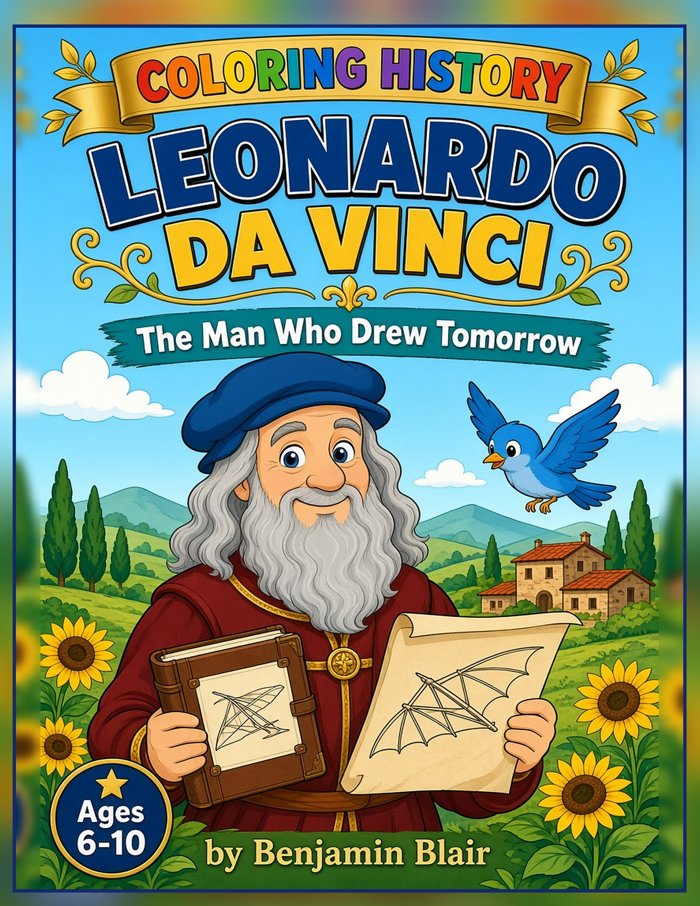
The books / Scientists & Inventors
Leonardo da Vinci
The Man Who Drew Tomorrow
Leonardo da Vinci drew birds, horses, and flying machines. He painted the Mona Lisa. He even wrote backward, so you needed a mirror to read his notes! Kids color 18 scenes from his life, each paired with a short, easy page about what really happened.
- Ages 6 to 10
- 40 pages, 8.5 × 11 in
- 18 scenes to color
- Paperback, printed on one side
He drew flying machines 400 years before airplanes.
Who was Leonardo da Vinci?
Leonardo was born in 1452 near a small town in Italy called Vinci. "Da Vinci" just means "from Vinci," so his name is really Leonardo from Vinci. He became one of the most famous painters who ever lived, but he was also an inventor, an engineer, a scientist, and a musician. More than anything, he was curious. He wanted to know how everything worked: birds, rivers, muscles, light, and machines.
A boy who looked at everything
Leonardo grew up in the hills of Tuscany. He did not go to a fancy school. Instead he spent his time outdoors, watching birds fly and water move, and drawing what he saw. When he was a teenager, his father took him to the big city of Florence to work in the workshop of a famous artist named Verrocchio. There he learned to paint, sculpt, mix colors, and build things with his hands.
Notebooks and mirror writing
Leonardo carried a notebook everywhere. He filled page after page with drawings, questions, and ideas: a bird's wing, a baby inside its mother, a machine for lifting heavy stones, the way a face changes when it smiles. About 7,000 of those pages still exist today. He wrote his notes backward, from right to left, so you need a mirror to read them easily. Nobody is sure why. Some people think it was because he was left-handed and did not want to smudge the ink.
Flying machines
Leonardo believed people could fly if they understood how birds did it. He drew wings you could strap to your arms, a machine with flapping wings, a spinning screw that looks a little like a helicopter, and even a parachute. None of them were built in his lifetime, but his drawings were hundreds of years ahead of their time. The first real airplane did not fly until 1903, more than 400 years after Leonardo sketched his.
The famous paintings
In the city of Milan, Leonardo painted The Last Supper on the wall of a dining hall. Back in Florence, he began a portrait of a woman with a small, mysterious smile. He worked on it for years and carried it with him wherever he went. Today it is called the Mona Lisa, and it is probably the most famous painting in the world. Leonardo also studied the human body very carefully so his paintings would look real. His drawing of a man inside a circle and a square, the Vitruvian Man, is still printed on posters and coins.
What we kept
Leonardo spent his last years in France, working for the French king, and died there in 1519. His notebooks are in museums and libraries around the world, and engineers still build his machines to see if they work. Many of them do. Leonardo taught the world that art and science are not opposites: a good artist looks closely, and a good scientist does too.
What's in the book
The 18 coloring scenes follow his life in order: A Boy in Vinci, A Walk in Florence, The Workshop, Friends in the Workshop, Artist and Inventor, How Does a Horse Move?, The Horse That Waited, Flying Machines, A Screw That Could Fly, Water Can Work, Notebooks Full of Ideas, He Wrote Backward, He Watched Birds, His Last Home, What We Kept.
- A pronunciation page
- A map of Leonardo's Italy
- A "What We Kept" page on the ideas we still use
- An "I Colored History" certificate
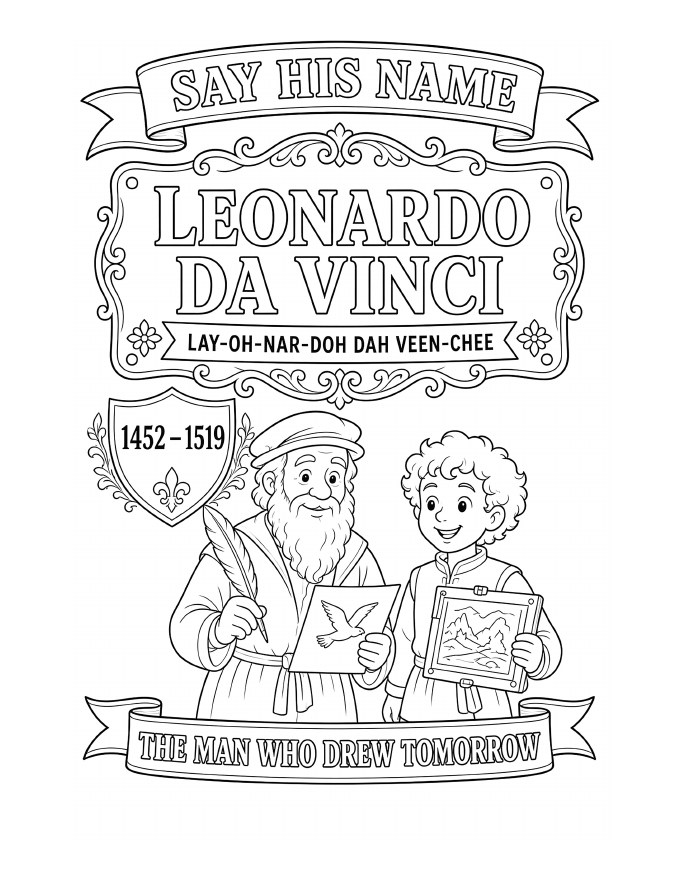
Free Leonardo da Vinci coloring page
This is the first coloring page from the book, with his name, how to say it, and the years he lived. Print it on regular letter paper. It is free for home and classroom use.
Download the PDFWant the other 17 scenes? Order the book for $9.99.